• Home
  • About This Blog
  • Contact Me
  • Subscribe
  • Comment Policy

Attempts at Honesty

Reflections on the interplay of the Bible and Culture

  • Westminster Shorter Catechism Series
  • Sermon on the Mount Series
Home Archives for Quotation

John Lennox on Truth

Posted on July 17, 2015 Written by Mark McIntyre 2 Comments

John Lennox on TruthMy mention of truth leads me to fear that some people of postmodernist persuasion may be tempted not to read any further, unless of course they are curious to read (and maybe even attempt to deconstruct) a text written by someone who actually believes in truth. For my part I confess to finding it curious that those who claim that there is no such thing as truth expect me to believe that what they are saying is true! Perhaps I misunderstand them, but they seem to exempt themselves from their general rubric that there is no such thing as truth when they are either speaking to me or writing their books. They turn out to believe in truth after all.
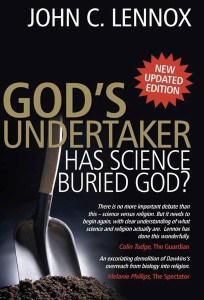
John Lennox in God’s Undertaker


Filed Under: Quotation

Oswald Chambers on a moral imperative

Posted on July 3, 2015 Written by Mark McIntyre 3 Comments

Oswald Chambers
Oswald Chambers

Every man has an imperative something within him which makes him say “I ought,” even in the most degraded specimens of humanity the “ought” is there, and the Bible tells us where it comes from—it comes from God. The modern tendency is to leave God out and make our standard what is most useful to man. The utilitarian says that these distinct laws of conduct have been evolved by man for the benefit of man—the greatest use to the greatest number. That is not the reason a thing is right; the reason a thing is right is that God is behind it. God’s “oughts” never alter; we never grow out of them. Our difficulty is that we find in ourselves this attitude—“I ought to do this, but I won’t”; “I ought to do that, but I don’t want to.” That puts out of court the idea that if you teach men what is right they will do it—they won’t; what is needed is a power which will enable a man to do what he knows is right. We may say “Oh I won’t count this time”; but every bit of moral wrong is counted by God. The moral law exerts no coercion, neither does it allow any compromise. “For whosoever shall keep the whole law, and yet offend in one point, he is guilty of all” (James 2:10). Once we realize this we see why it was necessary for Jesus Christ to come. The Redemption is the Reality which alters inability into ability.

Can those of us who claim the name of Christ be honest and admit that we often find excuses to justify doing the wrong thing? Perhaps if we were more honest about this and less vocal about the failings of others, the world would see the church as something other than a bunch of judgmental hypocrites. Yes, I know that we are often unfairly criticised, but we need to own the times when the criticism is justified.

Also, we need to be more vocal about our inability to live up to any standard. As Chambers points out, our inability is why we need a savior. In Jesus we have a savior who “alters inability into ability.”

Filed Under: Quotation

Muggeridge on modern money-changers

Posted on May 30, 2015 Written by Mark McIntyre Leave a Comment

Christ and the MediaI read this paragraph in Malcolm Muggeridge’s Christ and the Media and thought I would share it without additional comment.

I had occasion once to take Mother Theresa into a New York television studio for her to appear in the Morning Show, a programme which helps Americans from coast to coast to munch their breakfast cereal and gulp down their breakfast coffee. She was to be interviewed by a man we could see on a studio monitor in living colour, with a drooping green moustache, a purple nose and scarlet hair. It was the first time Mother Teresa had been in an American television studio, and so she was quite unprepared for the constant interruptions for commercials. As it happened, surely as a result of divine intervention, all the commercials that particular morning were to do with different varieties of packaged food, recommended as being non-fattening and non-nourishing. Mother Teresa looked at them with a kind of wonder, her own constant preoccupation on being, of course, to find the wherewithal to nourish the starving and put some flesh on human skeletons. It took some little time for the irony of the situation to strike her. When it did, she remarked, in a perfectly audible voice: ‘I see that Christ is needed in television studios.’ A total silence descended on all present, and I fully expected the lights to go out and the floor manager to drop dead. Reality has momentarily intruded into one of the media’s mills of fantasy – an unprecedented occurrence. Somehow it gave me an extraordinarily vivid sense of what it must have been like all those years ago in the Temple at Jerusalem, when the money-changers were chased out, and their tables overturned. In the studio normal proceedings for the Morning Show were soon resumed, just as I am sure the money-changers were back in their places the following day. Indeed, they are there still. Both incidents, however, bear out the saying with which Solzhenitsyn concludes his Nobel lecture: ‘One word of truth outweighs the world.’

Filed Under: Quotation Tagged With: Media, money, money changer, Mother Teresa, Muggeridge

Yancey on the need for an absolute standard

Posted on May 25, 2015 Written by Mark McIntyre 1 Comment

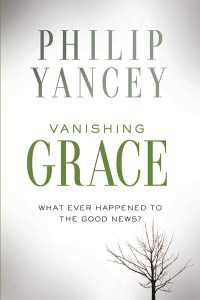
Vanishing GraceI want to share the following passage from Philip Yancey’s book Vanishing Grace:

The poet W. H. Auden, who left Europe in the 1930’s to escape the looming war, found his entire outlook shaken as he sat in a Manhattan theater watching newsreels of German atrocities. His belief in the goodness of human beings collided with the evidence of appalling evil flashing before him. He concluded, ‘If I was to say that was evil, I had to have a standard by which to do so. I didn’t have one . . . I’d spent all my adult life was an intellectual, destroying the absolutes, and now suddenly I needed one to be able to say that this was wrong.’

Auden left the cinema in search of some absolute, one stronger than liberal humanism, that would condemn the Nazis as well as defend their victims. He soon made his way to Christian faith. Only God could ask human beings, as he later said in a poem, to ‘love your crooked neighbor with your crooked heart.’

I like the last line. Not only does Christianity provide an answer to the evil that surrounds me, it provides an answer the evil that resides in my own heart.


Filed Under: Quotation

  • « Previous Page
  • 1
  • …
  • 8
  • 9
  • 10
  • 11
  • 12
  • …
  • 23
  • Next Page »

Follow Attempts at Honesty

Honesty in your Inbox

Post Series

  • Westminster Shorter Catechism Series
  • Sermon on the Mount Series
February 2026
SMTWTFS
1234567
891011121314
15161718192021
22232425262728
« Jan    

Categories

Archives

Blogger Grid
Follow me on Blogarama

Copyright © 2026 · Focus Pro Theme on Genesis Framework · WordPress · Log in