• Home
  • About This Blog
  • Contact Me
  • Subscribe
  • Comment Policy

Attempts at Honesty

Reflections on the interplay of the Bible and Culture

  • Westminster Shorter Catechism Series
  • Sermon on the Mount Series
Home Archives for Bible Reflection

Skepticism – Means or an end?

Posted on December 18, 2011 Written by Mark McIntyre 1 Comment

SkepticismI seem to recall that in the introduction to at least one of his books, C. S. Lewis offered the caveat that he was not a theologian. In a similar vein, prior to the material below, I must offer the caveat that I am not a philosopher nor the son of a philosopher.

In a post reflecting on the death of Christopher Hitchens, one commentator drew a contrast between skepticism as a pathway to truth and skepticism as a destination. In the former, skepticism is a methodology for seeking truth. In the latter, skepticism makes the statement that there is no truth to find.

It is one thing to be suspicious of truth claims and seek to verify them before believing. It is another thing entirely to reject all truth claims. A piece of lyric from a Rush song comes to mind, “If you choose not to decide, you still have made a choice.” To maintain skepticism as an end or destination is an attempt to remain as a spectator on the sideline, but ultimately it fails. Skepticism is a choice in itself.

It seems obvious to me that man is born to believe in something. As evidence of this I would point to the various religions that can be found around the world. Pantheistic, polytheistic, or monotheistic, there is quite a variety of beliefs. While the various religions are in fundamental disagreement on the particulars, they all are a function of belief.

But there is evidence that the irreligious also have a need to believe. Politicians, actors and musicians are followed with a devotion that borders on worship. Sports teams also function as a focus of belief. I live near the city of Philadelphia where a loss by the beloved Eagles (a frequent occurrence this year) is mourned like the death of state leader. Whether it is politics, music, sports or hobbies, many are caught up in these things with a religious fervor.

It seems to me that skepticism as a goal is a dead end. But is all skepticism wrong?

If you want to point to some of the foibles of the church throughout history as a reason to distrust religion, you are welcome to do so. The church, like her individual members, is not perfect and we get it wrong some of the time. But as Thomas Gilson points out in his thoughtful post on the death of Christopher Hitchens, it is important to make a distinction between God and religion. In my mind, some level of skepticism about the ability of the church to live out her relationship with God is healthy. We do not have a perfect track record.

I would ask those who are skeptical about the church to judge by the standard and not our inability to live up to it. The writer of Hebrews encourages us to look “unto Jesus, the author and finisher of our faith.” (Hebrews 12:2) I encourage the skeptic to do the same.
Filed Under: Bible Reflection, Christianity and Culture Tagged With: atheism, Jesus

Humility wins the day – The humble will be exalted

Posted on December 12, 2011 Written by Mark McIntyre 4 Comments

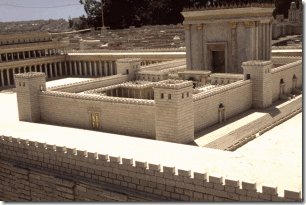
Herod's TempleTo illustrate the need for humility, Jesus tells a curious story about how a Pharisee and a tax collector happened to enter the Temple at the same time to pray. We are not told if this was a real event or a story that Jesus made up. I want to think that it was the former given the amount of detail and how this episode seems to square with knowledge of myself and observation of others.

Luke 18:11-12 tells us that the Pharisee was praying to himself in such a way as to let the people around him hear the prayer. God already knew his character and praying this out loud did nothing for his relationship with God. Perhaps this little public service announcement would enhance the Pharisee’s reputation, but I wonder. Nobody likes a smug, self absorbed know-it-all.

I have known people over the years that function as if they have inside knowledge on how to be a mature believer. These are the folks who feel superior to others in the church because they think they have elevated spirituality and knowledge. If you want to know what’s wrong in the church, these are the people to consult. These modern Pharisees are poison to the unity of the local church. True fellowship cannot happen when Pharisees are involved.

Contrast this to the tax collector in Luke 14:13. He came into the Temple understanding his need for forgiveness. Jesus tells us that the tax collector left the Temple with forgiveness and the Pharisee did not.

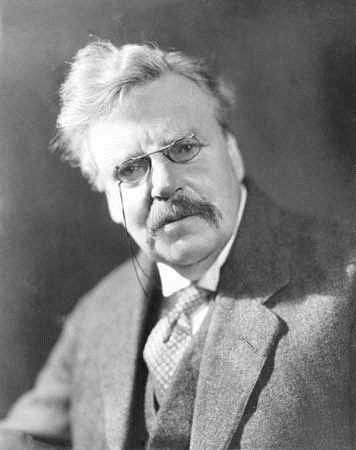
ChestertonWhen a newspaper requested responses to the question, “what is wrong with the world?”, G. K. Chesterton wrote a two word response. He wrote, “I am.”

What Mr. Chesterton understood, and what the Apostle Paul affirms in Romans 7, is that we never arrive at perfection in this life. None of us is in a position to feel superior to those around us. We all have an innate tendency toward sin. We all are a mess waiting to happen without the work of God in our lives.

While I may do a good job of hiding it, I am more like the Pharisee that I would like to admit. I may not be so bold and brash as to yell out praise to myself in the worship service, but I can respond in pride instead of humility. Is it only me, but when we read this story, isn’t our tendency to think, “God, I thank you that I am not like that Pharisee”? Perhaps there is a little bit of that Pharisee in each of us, which makes the story all the more poignant.

If each of us comes into fellowship with the attitude of humility, then we can begin to have real fellowship. If one or more of us comes with an attitude of superiority then it will be difficult to have anything more than superficial unity.

I don’t want to be the guy who scuttles fellowship with my pride. The church needs all of us to practice the humility that Paul describes in Philippians 2:3-8. Our mission, our fellowship and our legacy are at stake. It is humility that wins the day.

Filed Under: Bible Reflection Tagged With: humility, Jesus, pharisee

Why are you provoked? A Lesson from the Apostle Paul

Posted on December 9, 2011 Written by Mark McIntyre Leave a Comment

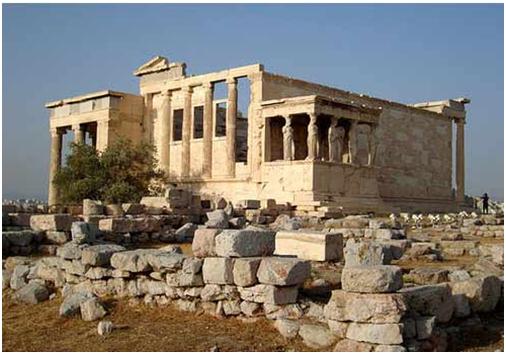
Paul was provoked on behalf of the AtheniansActs 17:16 records that when the Apostle Paul arrived in Athens, “his spirit was provoked within him when he saw that the city was given over to idols.”

Lots of things provoke me; I assume that is true for you also. The challenge that I get from reading about the Apostle Paul is that I am often provoked about the wrong things or about things that ultimately don’t matter.

Does it really matter that the guy in front of me in the “20 items or less” aisle has 25 items? Perhaps I am the only one, but inconsiderate or incompetent drivers frustrate me. Lots of things provoke me but most are unimportant in the long run.

The lesson I learn from Paul is that when I am provoked about something I should ask myself, “Am I provoked on my own behalf or am I provoked because of an injustice done to someone else?”

In 1 Corinthians 13:5, Paul tells us that “love is not provoked.” In other words, the one who loves does not take offense at the behavior of the one he loves. The one who loves does not look for opportunities to be offended. If I am offended or provoked because I have been inconvenienced or feel disrespected, I am not practicing love.

Paul was provoked because the Athenians’ worship of idols was misguided and futile. The Athenians were spiritually lost and Paul sought to do something about it. Paul was provoked on behalf of the Athenians, not on his own behalf. Being concerned for the people around him is a trademark of the Apostle’s behavior.

In Philippians 2:3-8, Paul identifies his inspiration for this attitude. He gets it from Jesus and encourages us to do the same. He points out in verse 5, “Let this mind be in you which was also in Christ Jesus.” He then identifies the trait of humility as being the motivation for looking out for the interests of others.

Perhaps this is a good test of humility. On whose behalf do you get provoked? Is it for your own promotion or for the benefit of others?

Ouch!

Filed Under: Bible Reflection Tagged With: humility, Love, Paul

Blessed are the meek – Part 2

Posted on December 7, 2011 Written by Mark McIntyre Leave a Comment

Ballot Box

#7 in the Sermon on the Mount series.

America will be holding a presidential election in 2012. As a result, political advertisements and discussions fill the airwaves and pixels of the news outlets. It is the way of politics to seek and to wield power and influence. It is not always the wisest voice that holds sway, it is often the loudest.

There are some who feel the church should enter the political process by competing for influence. Not long ago, I had a discussion with a man who was frustrated with our church because we do not band together with other churches to influence local elections. He felt that if we worked together, we could elect candidates favorable to the Christian viewpoint and Christian morality.

Now, I’m all for having candidates who are favorable to the Christian viewpoint. My concern is that by using the normal means of political influence, the church would be in violation of this beatitude.

Remember the Moral Majority? Every time the church has wielded political power, it has turned out badly for all. Based on how some church leaders have behaved over the years, and some of the things that have been said in the political arena, I can understand some of the skepticism of non-believers toward Christianity.

When was the last time you saw a candidate or a political pundit and thought to yourself, “now there is meekness on display.” Meekness isn’t electable. Meekness doesn’t sell airtime or internet advertisements. Meekness doesn’t wield power or influence.

Christianity turned the Roman world upside down, not through influence of elections or by a takeover of the political process, but by individual believers living out their faith in meekness and honesty.

The church’s mission is to make disciples. We are called to live out our faith and teach others why we live that way. We are not called to peddle influence or seek special protection or to organize voting blocks. My suspicion is that those in the church who would seek to influence the political process may be more concerned about their comfort than about accomplishing the task that Jesus has set us to do.

Jesus tells us that the meek will inherit the earth. As believers, we can trust that by living out our faith, by following Jesus’ command to love, by being ready to explain our faith, we can be used by God to accomplish his plan for humanity.

I am not saying that individual believers are not to be involved in politics or the political process. I am also not saying that political candidates should not be open about their faith or their motivation to pursue a particular legislative agenda. What I am saying is that it is not the role of the church and church leadership to be organizing voters or to be pursuing political power.

We are called to accomplish our mission in meekness and humility. The outcome is certain if we do. Why then should we allow ourselves to get drawn into a battle that is not ours to fight?

Jesus told Peter in Matthew 26:52, that those who take up swords will ultimately die by them. The same is true of political swords.

The meek, not the politically astute, not the people of influence, will inherit the earth. Humility wins the day.

Filed Under: Bible Reflection Tagged With: Beatitude, blessed, Church, meekness, Politics, power

  • « Previous Page
  • 1
  • …
  • 123
  • 124
  • 125
  • 126
  • 127
  • …
  • 150
  • Next Page »

Follow Attempts at Honesty

Honesty in your Inbox

Post Series

  • Westminster Shorter Catechism Series
  • Sermon on the Mount Series
January 2026
SMTWTFS
 123
45678910
11121314151617
18192021222324
25262728293031
« Dec    

Categories

Archives

Blogger Grid
Follow me on Blogarama

Copyright © 2026 · Focus Pro Theme on Genesis Framework · WordPress · Log in